Knots
A few weeks ago, a date reminded me the link to this Substack is in my Instagram bio, and I realized it’s been an embarrassing nine months since I’ve actually written one. Sorry to keep all thirty of you waiting. For much of that time, I’ve been playing a vicious little mental game I’ll call What’s the Point? Perhaps you’ve played it yourself, and know it can be difficult to stop once you’ve started.
Renata Adler had it right: “You cannot be forever watching for the point, or you lose the simplest thing: being a major character in your own life.”
Playing WTP can quickly distill my focus onto whatever gets me paid or laid, and eventually the other things I want to do (re this newsletter) start to seem like just another species of work. I tie myself into a nasty knot, a tourniquet cutting off my own joy. Sorry for the hackneyed metaphor, but I’m trying to loosen that knot a bit.
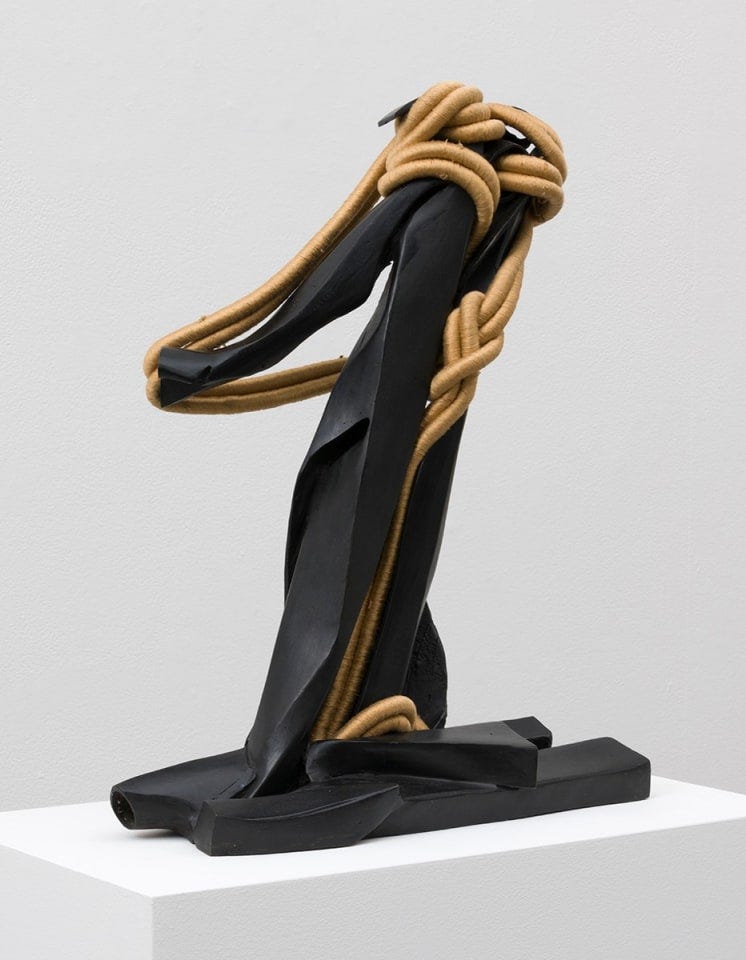
Speaking of knots, get a load of the gorgeous silk cords on this Barbara Chase-Riboud sculpture. Chase-Riboud is probably the most interesting woman alive. She had eight simultaneous museum exhibitions last fall in Paris. Also a poet, a novelist, a civil rights baddie, this lady is vibrating on another level.
Other people have written intelligent things about the political context and formal conceits that underpin her work, but you don’t really need to know any of that to appreciate her Musica series. They’re just so elegant, so sensual. If I owned one I would touch it all the time, probably lick it every once in a while.
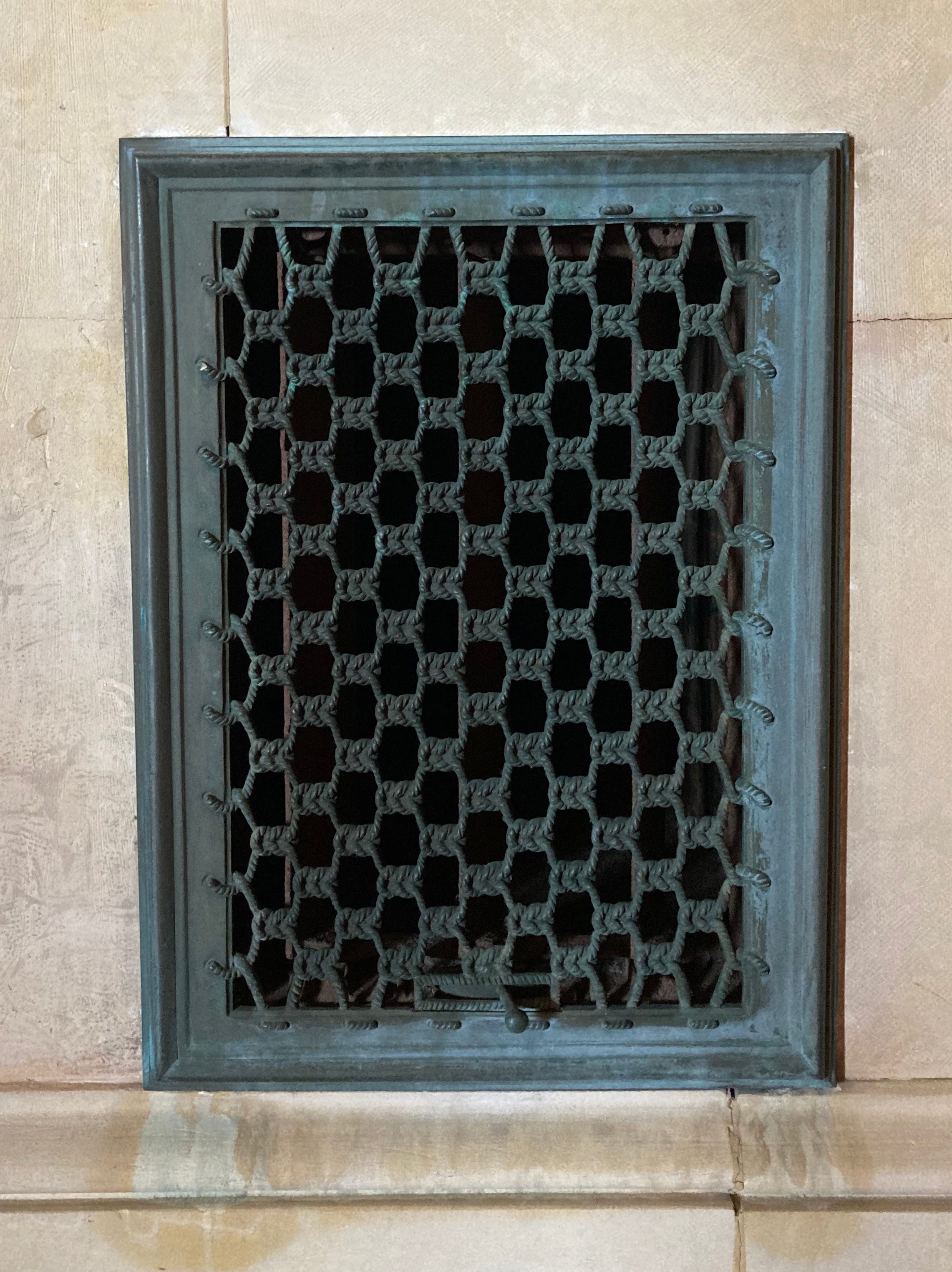
Last summer, I met my family in Rhode Island for a brief vacation. We drove over to Newport one day to have a look at the Breakers. This 70-room monstrosity contained some charming details (like the knot pattern on this iron grate) but the combined weight of all that grandeur honestly felt a little gross. Even, dare I say, Trumpian? All in all, a pretty compelling argument for federal income taxes.
I’m not the only one who found it vulgar. Edith Wharton, who lived in Newport for a few years, called the Breakers “a sort of Thermopylae of bad taste.” Coincidentally, I finished Wharton’s The Custom of the Country while I was in Rhode Island, which I thought was basically a perfect novel. Undine Spragg is the perfect antiheroine–insatiably avaricious, intellectually incurious, a shameless and borderline sociopathic social climber. I couldn’t stop thinking about her for weeks. If you’re an American, and especially if you’re a New Yorker, there’s probably a lot more Spragg in you than you care to admit.
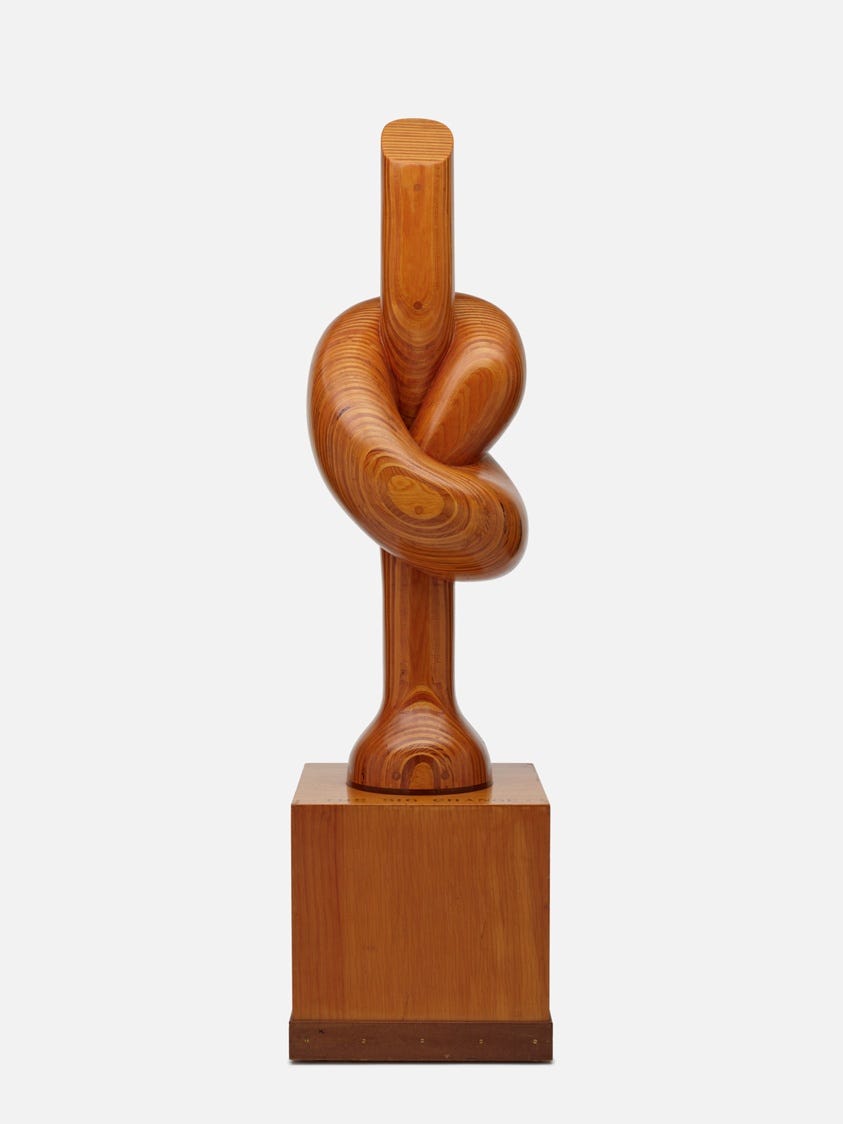
Last fall, after a meeting at the Art Institute of Chicago, I carved out a little time to poke around the Modern Wing. H.C Westermann was already on my mind, because I’d just seen some of his work at the Drawing Center, and this sculpture stopped me in my tracks.
Like Barbara Chase-Riboud, Westermann was a real master of his materials. The laminated plywood is sinuous, perfectly finished. Maybe the knot is a nautical reference (he served in the Navy during WWII), or a slyly subverted phallus, or a defiant middle finger. In any case, I hope I can make it back to the AIC for the big new show of his work that opens next month.
A few days after that trip to Chicago, I was on a plane to Paris to see some old friends and catch my friend Claudia Keep’s exhibition. Normally, I’d rather drink bleach than try to make conversation with a stranger on a transatlantic flight, but this time, the guy beside me was a delightful Italian who turned out to be a fan of Edward Melcarth, the Kentucky-born artist who designed Peggy Guggenheim’s kooky sunglasses. We yapped for six hours, and then got dinner when we landed.
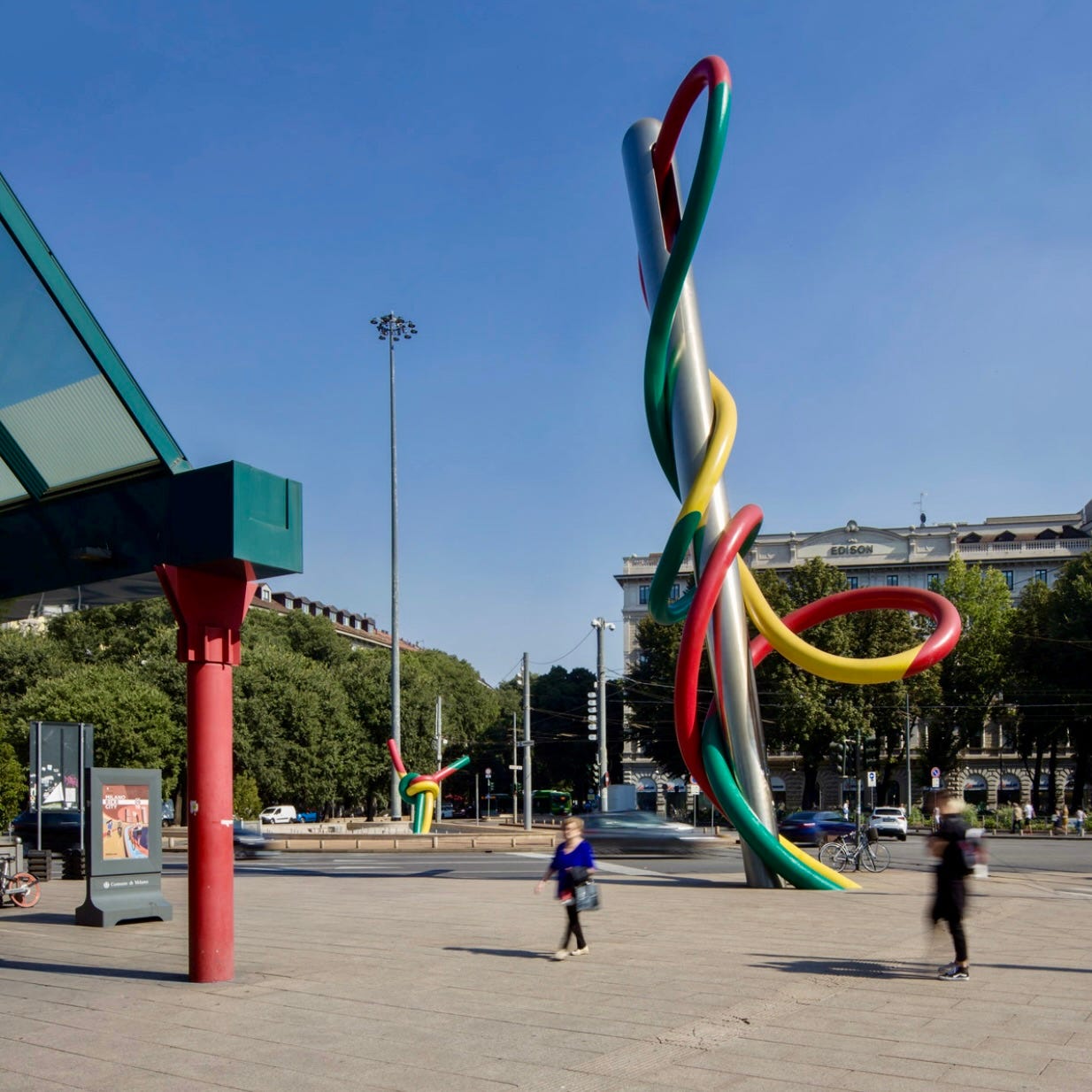
I mentioned the Westermann sculpture to my new pal Marco, and he told me it reminded him of this sculpture near a train station in Milan. Apparently no one was quite sure what to make of it when it was first installed, but now it’s a beloved landmark. This reminds me I should probably text Marco.